
Yamaha’s Bold Move: Embracing the V4 Engine
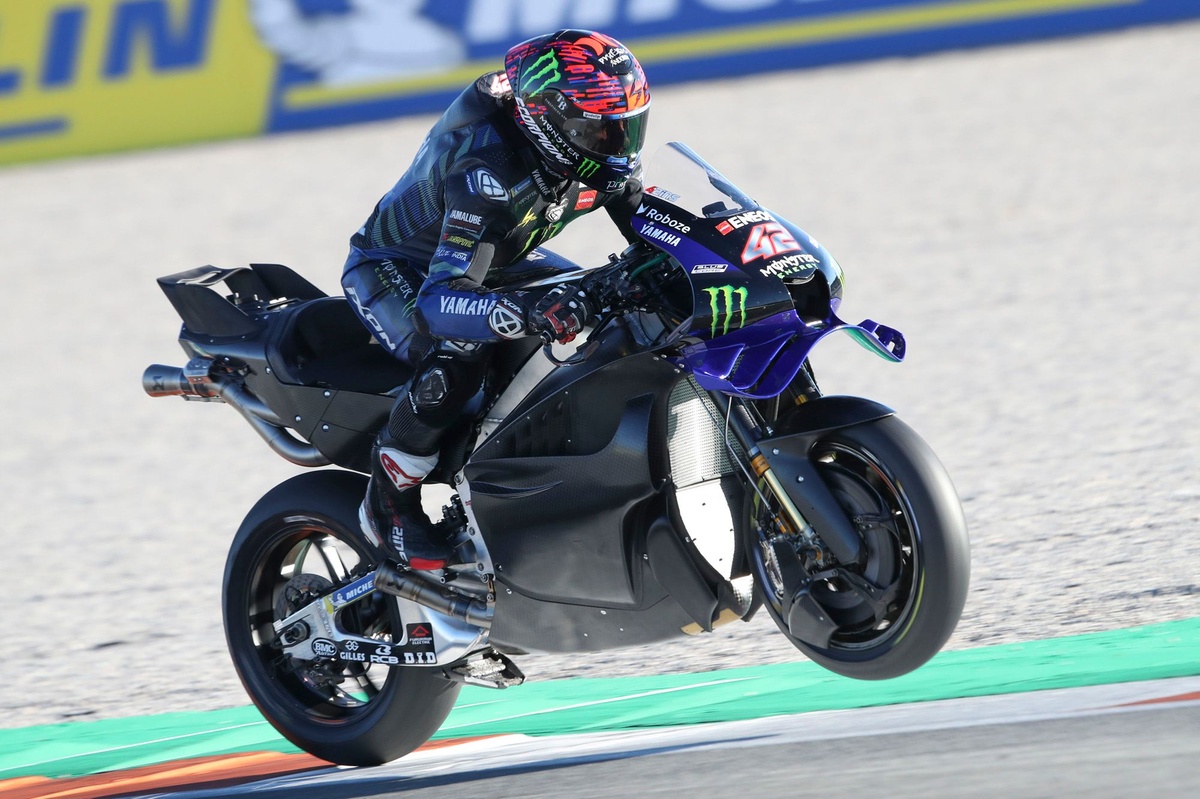
Yamaha has made a significant and daring decision to abandon its long-running inline-four engine in favor of a new V4 motor for the M1, aiming to boost its competitiveness as the current regulation cycle draws to a close in 2026. This shift is a strategic move to revitalize the brand’s presence in MotoGP, a championship where consistency and innovation are paramount. The V4-powered M1 made its latest public debut at the Valencia test, where it demonstrated promising performance. Star rider Fabio Quartararo set a time just half a second off the pacesetter, Raul Fernandez on the Trackhouse Aprilia. Following the public test, Yamaha conducted a private test at Circuit Ricardo Tormo to gather more data, ensuring the bike is as finely tuned as possible before the winter break.
Initial Impressions and Optimism
While Quartararo remained cautiously neutral about the V4’s performance after a challenging first outing at Misano, his teammates, Jack Miller and Alex Rins, were more optimistic. Pramac rider Jack Miller, known for his insightful feedback and on-track prowess, expressed confidence in the new engine’s potential. “There’s potential. The potential’s obviously going to be bigger. We wouldn’t go with it if we didn’t think it was going to be bigger than what we got,” he remarked. Miller noted that despite the bike being far from a finished product, a time just over half a second off the pace was a promising sign. He highlighted the need for further work on the electronics, particularly the fuelling and engine maps, to ensure the bike runs smoothly and efficiently.
Enhanced Performance in Critical Areas
Alex Rins, riding for Yamaha Factory Racing, echoed Miller’s sentiments and provided specific insights into the V4’s performance improvements. “The bike has slightly improved. They didn’t change anything in terms of gearbox or big items, but I felt better than in Misano,” Rins explained. One of the most significant improvements noted by Rins was the bike’s behavior under braking. With the inline-four engine, the bike primarily relied on the front tire for braking, leading to less stable and predictable performance. The V4, however, allows for a more balanced use of both tires, which enhances stability and control during braking. “In braking, it is much better than the inline-four. The problem with the inline-four was that we were stopping the bike only with the front tyre. With this bike, we are able to use both tyres. And as soon as you brake, the bike goes a little bit sideways, and this is really helpful,” he elaborated.
Addressing the Challenges
Despite the improvements, both Miller and Rins acknowledged areas that need further refinement. Miller pointed out that the V4’s front-end feel, a strong point of the inline-four M1, needs to be enhanced. “Obviously coming off the [inline-four] M1, which is a bike that’s got a remarkable front end, you’re always going to feel like you’re taking a back step in that sort of department,” he said. However, Miller is confident that the engineering team has a clear direction to improve the front-end stability, which he believes is an achievable goal. Rins, on the other hand, identified traction as the main weakness of the V4 bike. “It’s true that we can pick up the bike better than the inline-four because it’s moving less [and there is] less shaking. But picking up the bike like this, we are not able to find the traction,” Rins explained. He also mentioned that Yamaha is working on updates to address this issue, particularly in the area of speed and traction.
The Unique Characteristics of the V4
Miller provided a detailed comparison between the V4 and the inline-four M1, noting that while the new engine retains some of Yamaha’s DNA, it also introduces distinct characteristics. “I think it has the Yamaha DNA about it. It has a little bit of a Honda/KTM kind of sound about it and a Ducati feel in terms of weight,” he observed. The V4’s weight distribution and inertia give it a unique feel, with a torque progression and power delivery that sets it apart from its predecessor. This blend of familiarity and innovation is crucial as Yamaha aims to balance the strengths of its past with the potential of the future.
Looking Ahead to 2026
As the 2026 season approaches, the V4-powered M1 is poised to make a significant impact in MotoGP. The initial tests have shown promising results, and the feedback from top riders like Miller and Rins is encouraging. While there are areas that need improvement, the engineering team at Yamaha is well-equipped to address these challenges. The V4 project represents a bold step forward for the brand, and if the current trajectory continues, Yamaha could be in a strong position to challenge for top honors in the coming years. The combination of innovative engineering, rider feedback, and continuous refinement sets the stage for an exciting future in MotoGP.