
The Tensions on the Ice
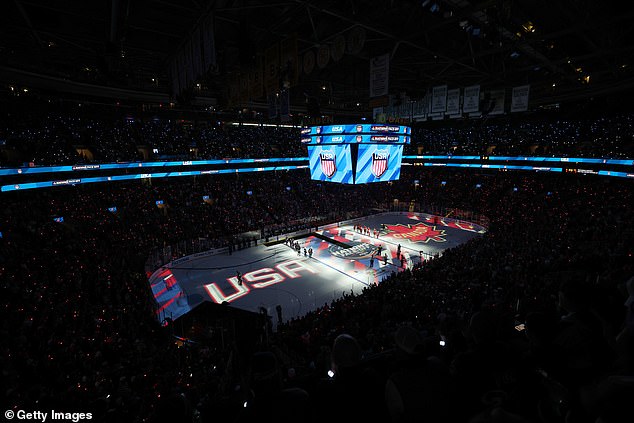
On Thursday night, the TD Garden in Boston was electric with anticipation as USA and Canada prepared to face off in the 4 Nations final. The atmosphere, however, was not solely about the game; it was heavily influenced by the ongoing political tensions. American President Donald Trump had recently threatened to impose tariffs on Canada, reigniting a heated grudge match that extended beyond the hockey rink. As the national anthem of Canada, "O Canada," began to play, the initial excitement of the home crowd turned sour, with boos echoing through the arena. The jeers slowly faded as the anthem continued, and the visiting Canadian fans, undeterred, sang their anthem proudly, a symbolic show of resilience and national pride.
The Pre-Game Controversy
Earlier in the day, President Trump added fuel to the fire by wishing Team USA good luck in a message posted on X, a social media platform. The message was then shared by PK Subban, a former NHL star from Canada, which sparked a vociferous backlash from his compatriots. Subban, known for his talents on the ice and his charitable work off it, found himself at the center of a heated debate. Akim Aliu, a fellow hockey player and outspoken advocate against racism, was particularly critical of Subban’s decision to share Trump’s message. Aliu, who is Nigerian-born and half-Ukrainian, has a history of speaking candidly about the racial discrimination he faced during his career. His father, father, and brother were also hockey players, and he has always carried the weight of their legacy and the struggle for equality in the sport.
Aliu’s Emotional Response
Aliu’s response to Subban’s post was both emotional and pointed. He wrote, "I’ve watched you from afar and never said anything for two main reasons. 1 being the respect I have for your brothers and parents & 2 I’ve always wanted to keep the in-fighting between folks of color to a minimum." Despite his usual restraint, Aliu felt compelled to speak out against what he perceived as Subban’s alignment with a figure known for controversial and often divisive rhetoric. He continued, "This was something I couldn’t let go – I’ve known you since I was ten years old and played with you, so I’d say I know you better than most at a deeper level." Aliu’s personal connection to Subban made his criticism all the more poignant, as he addressed Subban directly, appealing to their shared history and mutual understanding of the challenges faced by players of color in hockey.
The Platform and the Message
Aliu’s post highlighted the complexities of using a public platform. Subban, a prominent figure in Canadian hockey, has often used his influence for positive change. His charitable foundation, the PK Subban Foundation, focuses on improving the lives of children through education and healthcare. However, in sharing Trump’s message, Subban seemed to have stepped into a political minefield. Aliu accused Subban of prioritizing popularity and acceptance over genuine advocacy, stating, "You were a hell of a player and instead of using your platform you did everything in your power to gain acceptance and popularity, nothing with you has ever been genuine but transactional and usually for publicity reasons." This critique struck at the heart of the issue, questioning the integrity and authenticity of Subban’s actions in the face of political controversy.
The Weight of History
The controversy surrounding Subban’s post is not just about the immediate political climate but also reflects deeper historical tensions between the United States and Canada. For many Canadians, President Trump’s threats are seen as an attack on their nation’s sovereignty and economic well-being. Aliu’s warning, "Even during this most sensitive time both politically and socially you take the side of the oppressor because that’s who you make your money from," underscores the fraught relationship between public figures and their political affiliations. It also highlights the potential consequences of such actions, as "history will judge you accordingly." The weight of history and the expectation for public figures to act with moral integrity were clearly at play in Aliu’s criticism.
A Symbol of Unity and Resilience
Despite the pre-game tensions, the rendition of "O Canada" ultimately became a symbol of unity and resilience. As the boos initially drowned out the anthem, the Canadian fans in attendance did not waver. They continued to sing, and their voices grew louder, creating a powerful counterpoint to the initial jeers. This moment of solidarity, captured in the TD Garden, reflected the strength of the Canadian spirit and the unwavering support for their team. It also served as a reminder that, in the face of adversity, the human capacity for unity and pride can shine through, transcending the boundaries of politics and national rivalry.