
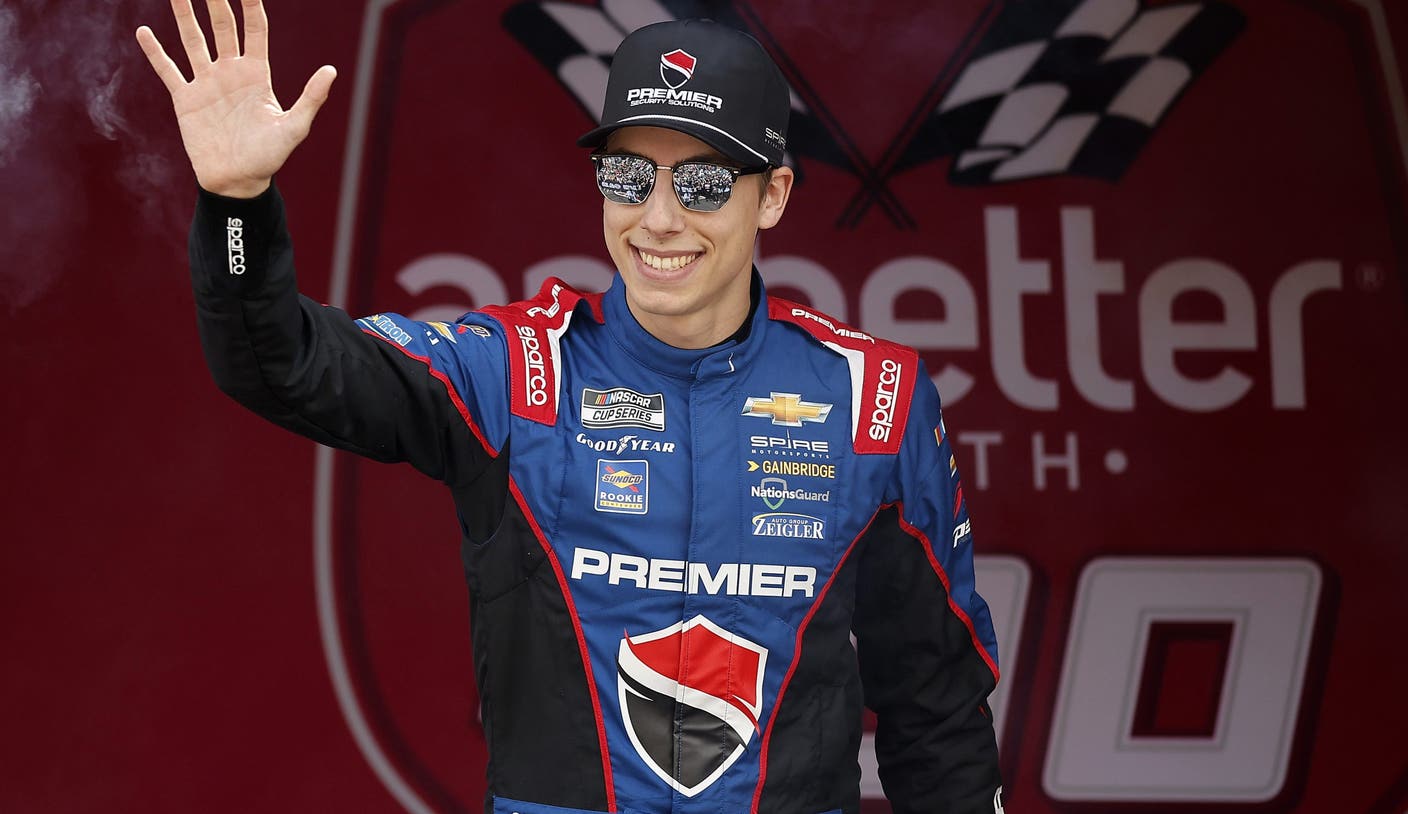
Carson Hocevar: A Rising Star with a Contentious Approach
Carson Hocevar’s second-place finish at Atlanta Motor Speedway on Sunday may have earned him a spot on the podium, but it also left a trail of frustrated competitors in its wake. At just 22 years old, Hocevar has already made a name for himself with his aggressive racing style, which, while effective, often irks other drivers. After the race, a line of drivers, including 2023 Cup champion Ryan Blaney and his own iRacing mentor Ross Chastain, waited to confront him. Blaney, who was turned by Hocevar in the final stage, declared, "He’s just a moron," over his in-car radio, while Chastain, co-owner of the driver agency that represents Hocevar, was equally displeased. Despite the backlash, Hocevar remains unapologetic about his approach, stating, "We’re here to win races, not be a boy band and love each other and play on the playground together."
A Reputation for Aggressiveness
Hocevar’s reputation for losing his composure and retaliating on the track was well-known during his truck series days. However, this tendency has diminished since he joined Spire Motorsports and earned NASCAR top-rookie honors in the Cup Series last year. While his aggressive style has continued to draw praise from his camp, it has also earned him criticism from competitors. The timing and execution of his moves are often questioned, with many feeling that he overplays his aggression. During the first stage of the Atlanta race, two-time Cup champion Kyle Busch was particularly incensed by Hocevar’s maneuvers, voicing his frustration over the radio, "I’m over him. … I’m going to wreck his a–." Hocevar’s willingness to take risks, even if it means angering other drivers, is a double-edged sword that has left him in a precarious position within the racing community.
The Final Stages and the Overtime Drama
In the final stages of the race, Hocevar found himself racing among the leaders, a position that he had never before experienced in such a high-stakes environment. During the two-lap overtime finish, he managed to squeeze between Kyle Larson and Christopher Bell, showing the boldness that has become his trademark. Hocevar believed he had a shot at the win when the caution came out, freezing the field with Bell in the lead. "He’s been around enough now that you know he’s going to be the aggressor," Bell noted. "If there’s a hole, he’s going to take it. If there’s not a hole, he’s going to make one." Hocevar’s last-lap move didn’t result in a wreck, but it was clear that his aggressive style was a key factor in the race’s chaotic conclusion.
Learning from Mistakes
Hocevar’s aggressive style has been both a blessing and a curse. While it has often put him in contention, it has also led to questionable decisions and a fair share of frustration from other drivers. After the Atlanta race, he admitted that there were aspects of his driving that he needed to refine. "I was focused on defending middle more than hitting him," he said, referring to the moment when he inadvertently sent Blaney spinning. "I didn’t think it would offset him [into a spin]. I thought I could hit him pretty hard. That was the first time I probably lined up with Chevy nose with a Ford nose, and it just got him in a really bad spot." Hocevar acknowledged the negative optics and promised to improve, but he also emphasized that every driver makes mistakes in the heat of the moment. "There’s some stuff I’ve got to learn and clean up a little bit," he said, "but I feel like we put ourselves in the perfect opportunity to try and win a race."
A Different Strategy on Superspeedways
In the past, Hocevar’s approach to superspeedway events was to stay at the rear of the field and avoid accidents. This strategy occasionally paid off, but it was far from a guarantee of success. "I was normally 40th, waiting for them to crash and hoping they crash, and I finish in the teens," he said. For the Atlanta race, Hocevar felt he had a car good enough to race from the front. He was determined to be more aggressive and gain track position, a decision that ultimately paid off with his second-place finish. "I was racing from the drop of the rag," he explained. "I was in go, take every run and just get track position. And every time we lost it, we’d just get it right back." This new approach not only showed his willingness to take risks but also gave him the confidence he needed to perform at a higher level.
The Path to Respect
While Hocevar’s talent is undeniable, his reputation as an out-of-control racer is one he is still working to shake. The Atlanta race was a significant milestone in his career, but it also highlighted the fine line between aggression and recklessness. Drivers like Larson, who made a critical mistake late in the race by pinching Austin Cindric into the wall, causing Cindric’s race to end, are respected for their skills even when they make errors. "I’m sure that was my fault," Larson said, acknowledging his role in Cindric’s wreck. Hocevar, however, hasn’t yet earned the same level of respect. "I’ve always said I’m a really bad superspeedway racer," he reflected, "so this at least gives me a little bit more confidence." As he continues to learn and refine his craft, Hocevar will face the challenge of balancing his aggressive style with the need to build positive relationships with his peers.