
The Unorthodox Idea: Marcus Smith at Full-Back
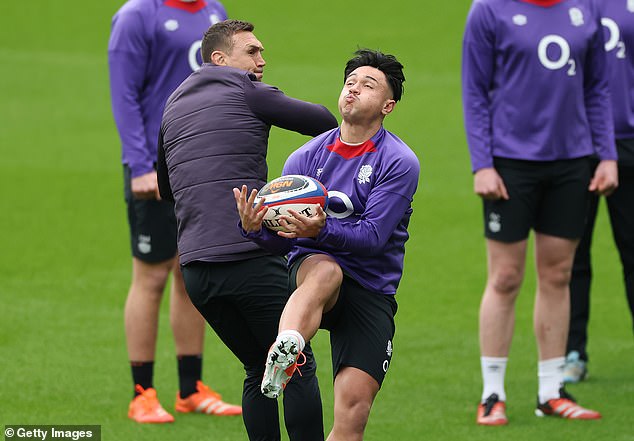
Before the 2023 World Cup, Kevin Sinfield, a seasoned coach and strategic thinker, proposed a radical idea: moving Harlequins fly-half Marcus Smith to the full-back position to give England a unique, counter-attacking threat. This unconventional move aimed to leverage Smith’s exceptional skills and create a dynamic presence in the 15 shirt. Despite some criticism following Smith’s two starts at full-back in this year’s Six Nations, Sinfield and Steve Borthwick’s coaching team are far from ready to discard the experiment. Sinfield emphasizes the importance of adapting to the modern game, where a second playmaker can make a significant difference. "Look at how the game is played now and how valuable a second ball player can be," Sinfield said. "Marcus’ big strengths are when he is in space. He can move laterally very quickly, putting defenders under a lot of stress. Clearly, it makes sense to try and get him a little bit wider where the gaps tend to be a bit bigger."
The Transition and the Challenges
Moving from fly-half to full-back is no easy feat, especially for a player who is not accustomed to the role. Marcus Smith, despite his occasional appearances at full-back for Harlequins, is primarily a 10. Sinfield acknowledges the challenges of the transition, noting that Smith has not had much time to adapt to the position. "He has not had a great deal of time there. We’ve all seen the reports about how he loves playing 10, he is an outstanding 10, but I think he is a very, very good 15 as well. Marcus would agree that some of his 15 play needs to improve," Sinfield said. The coach emphasizes that the experiment is far from a failure and that discarding it now would be a wasted opportunity. "If we threw it in the bin now, it would be a wasted opportunity," he added.
Marcus Smith: A Dual Threat
The potential for Marcus Smith to become a dual threat at both full-back and fly-half is a tantalizing prospect for the England coaching staff. Sinfield believes that with the right development, Smith could excel in both roles. "I would like to think so. If we can get him into a position where he is world-class at both, it gives us so many different options," Sinfield said. The idea of a third ball-player in the backline adds another layer of complexity and flexibility to England’s attacking strategy. This dual capability could be a game-changer, providing England with a versatile and dynamic option that few other teams can match.
The Competitive 10s and Diplomatic Challenges
The England coaching staff faces a diplomatic challenge in managing the competitive nature of their fly-halves. Fin Smith, Marcus Smith, and George Ford are all highly driven and competitive players, each vying for the chance to lead the attack. "It’s funny because all three of them are that driven that none of them are happy," Sinfield said. "Fin wants to improve his game. He’s started the last two, but he wants to be better and have more of an influence in there." The coaching staff must navigate these ambitions carefully to maintain positive morale and ensure that each player feels valued and motivated.
George Ford: A Veteran’s Perspective
George Ford, a veteran with nearly a century of caps, is currently unable to claim a place in the match-day 23, despite a brilliant performance on his last Test appearance in France last March. Sinfield praises Ford’s professionalism and attitude. "George has been exemplary. You get better at it with age, although I think it stings more, the older you get. He’s been awesome," Sinfield said. The veteran’s experience and leadership are invaluable, and the coaching staff is confident that his time will come. Ford’s continued dedication and excellence, even in the face of adversity, set a high standard for the entire squad.
Looking Forward: A Balanced Approach
As England continues to refine its game and explore new strategies, the decision to keep Marcus Smith at full-back remains a key part of their plan. The coaching staff is committed to developing Smith’s skills in both positions, believing that his versatility can provide a significant advantage. "A second ball player is really important, with the make-up of the back line. He could end up being a third ball-player at some stage," Sinfield said. The balance between innovation and maintaining a competitive edge is crucial, and the England team is poised to continue its journey with a balanced and forward-thinking approach.