

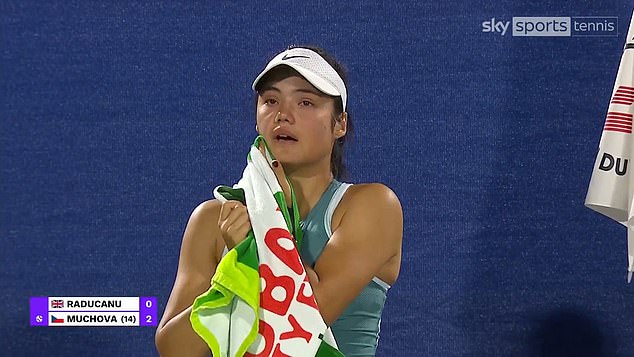
Emma Raducanu’s Emotional Encounter with a Stalker in Dubai
Emma Raducanu, the British tennis sensation, recently found herself in a harrowing situation during her match against former top-10 player Karolina Muchova in Dubai. Just two games into the match, play was abruptly halted as Raducanu, visibly distressed, broke down in tears. The 22-year-old was seen discussing the issue with umpire Miriam Bley, who communicated with tournament organizers via walkie-talkie. Raducanu then sought refuge behind the umpire’s chair, needing comfort from both Bley and her opponent, Muchova. Despite the emotional turmoil, Raducanu managed to return to the court and complete the match, though she ultimately lost 7-6, 6-4 in a tightly contested contest. The incident has brought to light the alarming frequency of such encounters for female athletes, highlighting the need for increased security and support.
Raducanu’s Brave Statement on Social Media
In the aftermath of the match, Raducanu took to social media to address the incident, sharing a photo of the Jane Austen novel ‘Emma’ and a cup of coffee. Her statement, while brief, was powerful and heartfelt. She wrote, "Thank you for the messages of support. Difficult experience yesterday but I’ll be okay and proud of how I came back and competed despite what happened at the start of the match. Thank you to Karolina for being a great sport and best of luck to her for the rest of the tournament." Raducanu’s words not only acknowledged the emotional impact of the event but also demonstrated her resilience and professionalism. Her ability to return to the court and compete, despite the initial shock, is a testament to her mental fortitude and the support she received from those around her.
The Broader Context: Katie Boulter’s Terrifying Ordeal
The incident involving Raducanu has resonated with other female athletes, particularly Katie Boulter, who shared her own harrowing experiences. Last year, Boulter and her Australian boyfriend, tennis player Alex de Minaur, found themselves in a terrifying situation when a stalker followed them home. Boulter described the incident to The Guardian, saying, "It happens to all of us. It’s part of life when you’re in the public eye a little bit. Obviously you don’t feel comfortable." One particularly unsettling incident occurred in Nottingham, where Boulter received threatening messages on social media. The stalker claimed to be outside her location and threatened to harm her if she came out. Boulter promptly alerted the WTA, and the organization swiftly found the individual, who was actually on site. This incident, while resolved, underscores the constant vigilance required by female athletes in the public eye.
The Universal Nature of These Fears
Boulter’s experiences are not isolated incidents. She recounted another disturbing event where a car followed her while she was picking up de Minaur from Queen’s Club in London. The stalker trailed them to Sloane Square, watching them as they walked around, and then continued to follow her car all the way home. Boulter, while unsettled, found some comfort in de Minaur’s presence. She said, "I was with Alex, so it was absolutely fine, but yeah, it wasn’t the best feeling." Boulter’s matter-of-fact tone in describing these events belies the deep-seated fear and discomfort that female athletes often face. Her reflections highlight the universal nature of these fears, particularly for women who are alone at night. Boulter added, "Us as women, if we’re home alone at night, sometimes we do think about those things." This sentiment is a stark reminder of the additional burdens that female athletes carry, beyond the physical and mental demands of their sport.
The WTA’s Role in Protecting Athletes
Despite the unsettling nature of these incidents, Boulter praised the WTA for its efforts in protecting athletes. She said, "The WTA does a great job of being there for you with that." The organization’s quick response to her alerts and the presence of security personnel at tournaments provide a sense of safety and support. However, the fact that these incidents continue to occur suggests that more needs to be done to ensure the well-being of female athletes. The WTA’s proactive measures, while commendable, must be complemented by broader societal changes to address the root causes of such behavior. The tennis community, fans, and the public at large have a role to play in creating a safer and more respectful environment for all athletes.
The Need for Increased Awareness and Support
The incidents involving Raducanu and Boulter have sparked a conversation about the safety and well-being of female athletes. While the WTA and other organizations have taken steps to protect players, the frequency of these encounters underscores the need for increased awareness and support. Female athletes, like Raducanu and Boulter, are not just public figures; they are individuals who deserve to feel safe and secure both on and off the court. The tennis community and fans can contribute by being more vigilant and reporting any suspicious behavior. Additionally, educational campaigns and stricter penalties for stalkers and harassers can help deter such incidents. The resilience and professionalism of these athletes in the face of such challenges are inspiring, but it is crucial that they receive the support and protection they need to focus on their sport and their well-being.