
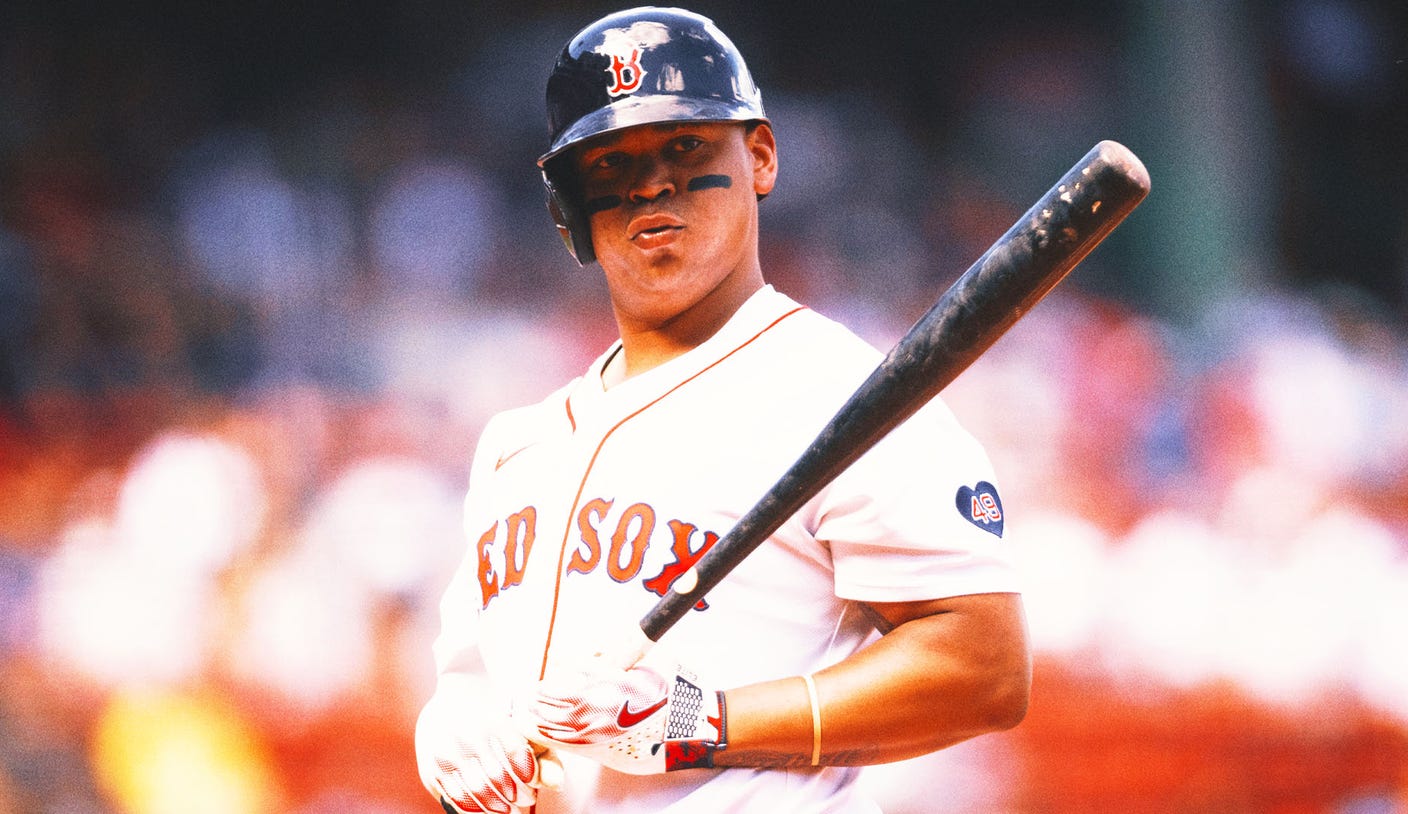
The Red Sox’s Bold Move: A Challenge at Third Base
The Boston Red Sox have made a bold move by signing Alex Bregman to a three-year, $120 million contract, which includes a $5 million signing bonus. Bregman, a two-time All-Star, brings a proven track record of hitting over 20 home runs each of the past three seasons. The signing was aimed at bolstering the team’s lineup and ending a period where the Red Sox have missed the playoffs five out of the past six years. However, this high-profile acquisition has sparked a significant issue within the team, as third baseman Rafael Devers has firmly stated his intention to remain at his position.
Devers’ Strong Stance: Third Base is Non-Negotiable
Rafael Devers, a three-time All-Star, has been a cornerstone for the Red Sox since 2017. In January 2023, he signed an 11-year, $331 million contract, solidifying his long-term commitment to the team. Devers has been nothing short of impressive, hitting 28 home runs and driving in 83 runs last season despite playing just 138 games due to injuries. The year before, he had an even more remarkable performance, with 33 homers and 100 RBIs over 153 games. When asked about the possibility of moving to the designated hitter (DH) position, Devers was unequivocal in his response: "No." His stance is clear, and he is prepared to stand his ground.
The Financial and Emotional Investment
The Red Sox’s significant financial investment in both Bregman and Devers reflects the team’s high expectations and the pressure to succeed. Devers’ recent contract, one of the largest in MLB history, underscores the club’s belief in his talents and leadership. This financial commitment gives Devers considerable leverage in his push to remain at third base. The Red Sox are in a delicate position, balancing the need to improve their roster with the morale and performance of their star players. Devers’ strong performance and the substantial investment in him mean that the team cannot afford to alienate him.
Manager Alex Cora’s Perspective
Red Sox manager Alex Cora has acknowledged the complexity of the situation. He noted that Devers "was very vocal last year" about the need for the club to improve, highlighting the player’s commitment to the team’s success. Cora emphasized that the decisions made about roster construction will be in the best interest of the team. "The decisions that are going to be made here about roster construction and about what we’re going to do in the future, we’re going to make sure we have the best team possible out there," he said. Cora also recognized Devers’ pride and his desire to continue playing third base, stating that the team will make decisions accordingly. The manager’s approach is one of flexibility and versatility, suggesting that Bregman could end up at second or third base, while Devers could play third or serve as the designated hitter.
The Bigger Picture: Team Dynamics and Strategy
The situation at third base is a microcosm of the broader challenges the Red Sox face. The team’s decision to sign Bregman reflects a strategy to build a competitive lineup capable of returning to the playoffs. However, this strategy must consider the dynamics within the clubhouse and the impact on key players like Devers. The Red Sox will need to navigate this issue carefully to ensure that the tensions do not undermine team cohesion and performance. The club’s goal is to create a balanced and harmonious environment where all players can thrive and contribute to the team’s success.
The Road Ahead: Balancing Ambition and Harmony
As the Red Sox move forward, the focus will be on finding a solution that maximizes the team’s potential while respecting the individual aspirations and values of their players. The signing of Bregman and Devers’ strong stance have created afait accompli that the team must address thoughtfully. Manager Cora and the front office will need to engage in open and transparent communication with both players to find a way to integrate Bregman into the lineup without compromising Devers’ role. The Red Sox’s ability to navigate this challenge will be a critical test of their leadership and strategy, ultimately shaping the team’s prospects for the upcoming season and beyond.