
Ruben Amorim’s Reflection on United’s Troubles
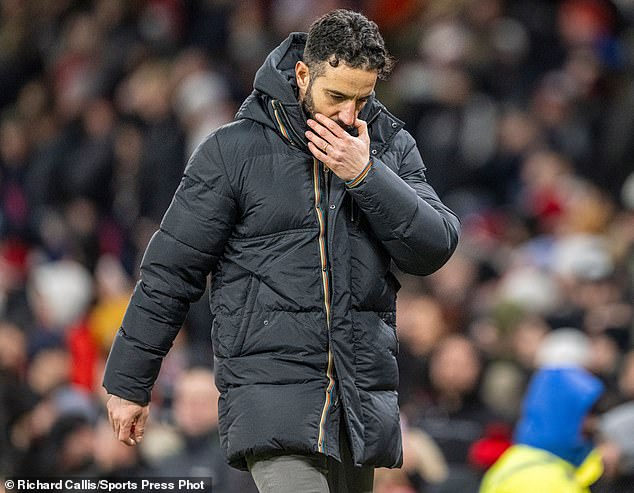
Ruben Amorim, the current head coach of Manchester United, has taken a candid and empathetic stance regarding the financial turmoil and job losses sweeping through Old Trafford. In a revealing statement, Amorim acknowledged that both he and the players share a responsibility for the difficult situation the club is facing. United, once a beacon of stability and success, is now grappling with significant financial losses, estimated at £300 million over the past three years. Co-owner Sir Jim Ratcliffe is implementing drastic measures to address these financial issues, including widespread redundancies and increases in ticket prices. Despite the focus on their upcoming match against Tottenham, Amorim insists that his team must not turn a blind eye to the reality that 250 employees have already lost their jobs, with another 100 at risk. "People are losing their jobs. It’s really important for us in the first-team, coaches, and players, not to ignore it," he stated, highlighting the broader impact of the club’s financial struggles.
The Financial Impact of Poor Performance
Amorim’s reflection on the club’s financial state is rooted in the team’s lackluster performances on the pitch. "We have to acknowledge that and the biggest problem is the football because we spend the money, we are not winning, we are not in the Champions League, so the revenues are not the same," he explained. The club has been hemorrhaging money, with a net spend of over £1.2 billion since Sir Alex Ferguson’s retirement in 2013, yet they have failed to secure the Premier League title or the Champions League. This poor return on investment has not only led to financial losses but has also created a ripple effect across the organization, where non-football employees are bearing the brunt. Antony and Jadon Sancho, who together cost the club £150 million, are currently on loan, while Casemiro, a £70 million signing, has been underutilized, starting only three out of 13 Premier League games since Amorim’s arrival in November. These examples underscore the club’s struggle to find value in their significant investments.
The Price of Failure
The financial strain on the club has necessitated cost-cutting measures in various areas. One of the most immediate impacts has been felt by the general employees, who are facing job cuts and a decline in morale. "Morale at the club among general employees is said to be low," Amorim noted. The cost of tickets for members has also risen, with prices now set at £66, and concession prices have been removed entirely. "We are responsible for that," Amorim admitted, echoing the sentiment that the team’s performance directly affects the club’s financial health and, by extension, the lives of its employees. He emphasized that winning games is a crucial step in helping the club stabilize and protect the jobs of those who are not directly connected to the football operations. "The first part, what we should do is to win at Tottenham. That is the small step to try to help these people, to try not to push the prices of the tickets higher," he said, illustrating the interconnectedness of on-field success and off-field stability.
Addressing the Transfer Market
In an effort to stem the financial bleeding, Manchester United has become more cautious in the transfer market. Their recent signing, Patrick Dorgu, a wing back who cost £25 million, is a clear indication of the club’s more pragmatic approach. This move is a stark contrast to the previous big-money transfers that have not yielded the desired results. For instance, Rasmus Hojlund, a £72 million striker, has gone 14 matches without a goal, further exacerbating the club’s financial woes. Amorim, while acknowledging the need for such caution, also expressed a desire to improve the team’s performance. "We have a lot to do. A lot to improve," he said, highlighting the challenges ahead but also the determination to turn things around. The coach’s focus remains firmly on the present season, with plans for the future contingent on the team’s ability to secure victories and stabilize their financial situation.
The Future of Expensive Wingers
One of the more notable aspects of United’s financial challenges is the state of their high-cost wingers. Both Antony and Jadon Sancho, who together cost a staggering £150 million, are out on loan, with Sancho having started only 41 Premier League games in three seasons before a fallout with former manager Erik ten Hag led to his loan move to Chelsea. When asked about the possibility of Sancho’s return, Amorim was straightforward and pragmatic. "I am really focused on this season. We have a lot to do. A lot to improve. We need to win games and then we will see next season," he stated. This approach reflects a broader strategy to prioritize immediate performance and financial stability over long-term speculative investments. The coach’s comments also hint at a potential overhaul of the squad, with the future of these expensive players remaining uncertain.
A Call to Unity and Responsibility
Amorim’s candidness and acknowledgment of the club’s financial difficulties serve as a rallying cry for the team to step up and take responsibility. "Yes, and we have to change that," he said, emphasizing the need for the football department to play a pivotal role in turning the club’s fortunes around. The head coach’s words are a reminder that the success of Manchester United extends beyond the pitch; it affects the livelihoods of hundreds of people who work tirelessly behind the scenes. By winning games and improving their performance, Amorim believes the team can help alleviate some of the financial pressures and contribute to a more positive environment within the club. His statement underscores the importance of unity and accountability, as the entire organization works to navigate through these challenging times and regain the stability and success that has long defined Manchester United.