
Testing the Future at Yankees Camp
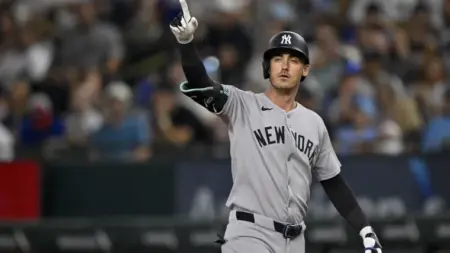
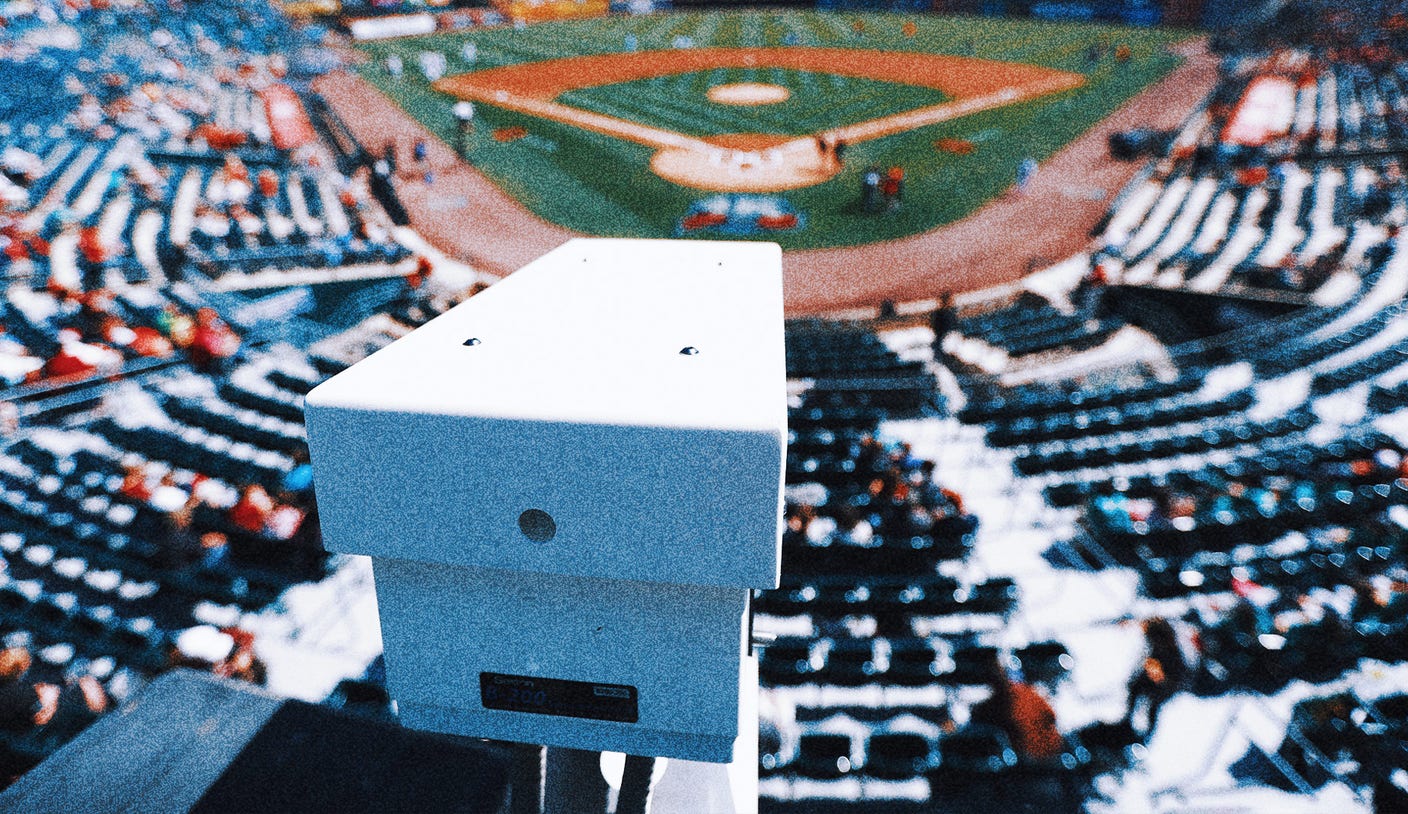
On Wednesday at Yankees camp, Luis Gil tossed a pitch to Aaron Judge that appeared to catch the bottom of the plate, but the call disagreed. Gil, confident that the pitch was a strike, instinctively touched his cap to signal a challenge. Moments later, the players and fans looked up at the video board, which confirmed that the pitch had indeed missed by a mere 1.8 inches. This interaction was a vivid example of the automated ball-strike challenge system (ABS) in action, a sophisticated technology designed to minimize human error in calling balls and strikes. While robot umpires are not yet a fixture in Major League Baseball (MLB), this spring marks the beginning of a significant experiment with a version of an automated strike zone. The ABS challenge system will be rolled out in more than 60% of spring training games across both Arizona and Florida, offering a glimpse into the future of baseball officiating.
How the ABS Challenge System Works
Starting on Thursday at Camelback Ranch, where the Los Angeles Dodgers and Chicago White Sox will open Cactus League play, the ABS challenge system will be implemented. The system allows each team to challenge two ball or strike calls per game, and they will only lose a challenge if it is unsuccessful. To challenge a call, a batter, pitcher, or catcher must tap their head immediately after the pitch, without any assistance from the manager or players in the dugout. Once a challenge is made, the Hawk-Eye tracking technology will be displayed on the videoboard, showing whether the pitch was a strike or a ball. On average, these challenges at the Triple-A level have taken just 17 seconds to complete, making the process relatively seamless. The dimensions of the strike zone are determined by the batter’s height, with the top of the zone set at 53.5% of the player’s height and the bottom at 27%. All position players have been measured during spring training to ensure accurate zone calibration.
Preparing for the Future
The ABS challenge system is not yet a fixture in every spring stadium, as not all are equipped with the necessary technology. In the Cactus League, the system will be used at the five dual-team stadiums: Camelback Ranch, Surprise Stadium, Peoria Sports Complex, Goodyear Ballpark, and Salt River Fields. Similarly, in the Grapefruit League, it will be available at George M. Steinbrenner Field, Clover Park, TD Ballpark, LECOM Park, Publix Field, Hammond Stadium, and Roger Dean Chevrolet Stadium. While the system is not scheduled to be implemented in the 2025 MLB season, a successful trial during Cactus and Grapefruit League play could lead to its adoption as early as 2026. This spring marks the first time the system will be tested at the big-league level, although players on rehab assignments have already experienced various versions of ABS in the minor leagues.
Players’ Reactions to the New Technology
The reactions to the ABS challenge system among MLB players are mixed, but many are cautiously optimistic. Diamondbacks ace Corbin Burnes remarked, "We’ve heard good things about it, heard bad things about it. At the big-league level, we want to see how things work and get a good few weeks in to see if it’s something that will be feasible in the future, but we’ll see how it goes. It’s still technology, so it’s still going to have its bugs that they’re going to have to figure out." Pitchers, in particular, are skeptical about the new system. Burnes, who has a habit of studying the historical strike zones of umpires before each start, noted that while umpires occasionally make mistakes, they generally adhere to their established zones over long careers. This predictability is something pitchers rely on, and any sudden changes can be unsettling.
The Experience of Triple-A Players
Triple-A players have had more experience with both full ABS and the challenge system, and their feedback is crucial for the ongoing development of the technology. Dodgers pitcher Landon Knack shared his insights, stating, "It’s currently a little inconsistent. Ballpark to ballpark, it would not be calibrated the same. So, you’d go some places and it’d be higher or lower. You go to some places, and it’s actually moved over an inch or two." Knack also pointed out that the zone in ABS tends to be smaller than what he’s been accustomed to, often resulting in calls he would normally get being taken away. This discrepancy was evident in his statistics, with a higher walk rate in Triple-A under ABS compared to his time in Double-A. Despite these challenges, Knack remains open to the potential benefits of the system, believing it could enhance the game’s accuracy and fan engagement once the kinks are worked out.
Managerial Strategy and Fan Engagement
Managers are also adapting to the new system, carefully strategizing when to use their challenges. Dave Roberts, who will be managing the first spring game with ABS technology, advised his hitters to be cautious when challenging low breaking balls, as these are often called strikes by human umpires. Roberts even shared a light-hearted moment, telling Max Muncy, one of his team’s most frequent offenders in disagreeing with strike calls, to save his challenges for more critical moments. The challenge system is designed to engage fans by providing real-time feedback and adding an element of interaction to the game. While some players, like Knack, have encountered issues with the system’s consistency, the overall goal is to improve the accuracy of calls and create a fairer playing environment. The ABS challenge system represents a step toward a more technologically advanced future for baseball, where human and mechanical elements work together to enhance the sport’s integrity and enjoyment.