

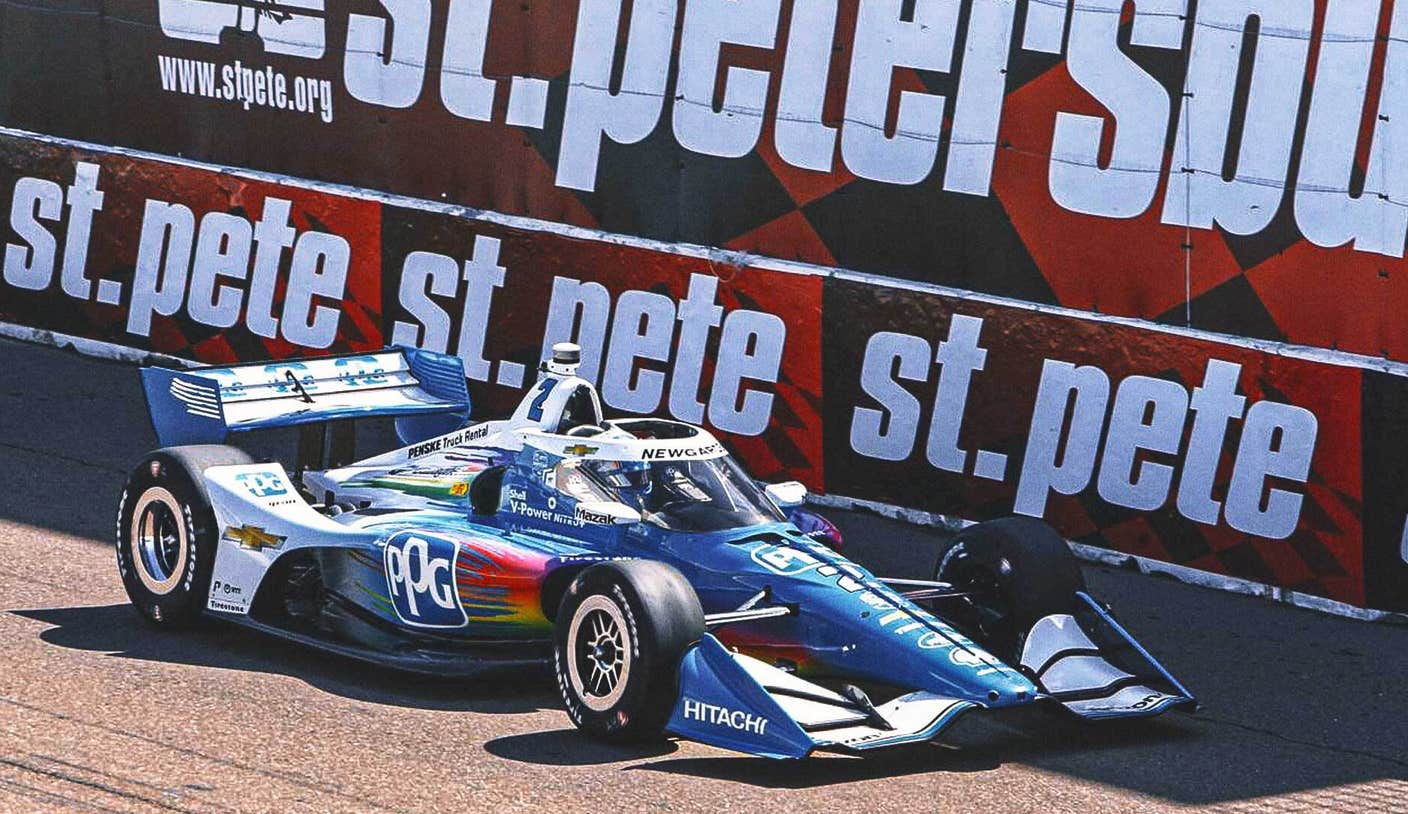
Understanding the Boost Systems in INDYCAR
In the heart of the action-packed INDYCAR SERIES, drivers often rely on a bit of extra power to outmaneuver their competitors and secure wins. On Sunday at the Grand Prix of St. Petersburg, this dynamic was particularly evident thanks to two distinct boost systems: push-to-pass and the hybrid engine system. These systems, though differing in their mechanics and usage parameters, play a crucial role in the strategic and competitive aspects of the race.
The push-to-pass system is a well-established feature in INDYCAR. It’s an electronic trick that temporarily increases the car’s engine power, allowing the driver to make a bold move or defend their position. Activated by pressing and holding a button on the steering wheel, this system is controlled by the Engine Control Unit (ECU). For the St. Petersburg race, the maximum time a driver can hold the button is 15 seconds, with a total of 150 seconds available for the entire event. The same limits apply to races at Detroit, Laguna Seca, and Thermal. However, for the other seven road courses—Long Beach, Barber, Indianapolis, Road America, Mid-Ohio, Toronto, and Portland—the maximum per push is 20 seconds, with a total of 200 seconds for the race. This system is exclusive to road and street courses, and each track has its own specific rules regarding its usage.
The Hybrid Engine System: A New Dimension
The introduction of the hybrid engine system in the middle of the 2023 season brought a fresh twist to the competition. Unlike push-to-pass, which has a limited, pre-determined amount of boost, the hybrid system utilizes energy stored during the race. Drivers can tap into this energy whenever they need it, and they have as much as they have accumulated. This flexibility adds an element of continuous strategy, as drivers must balance charging the system and deploying it effectively throughout the race.
The hybrid system is particularly useful in low RPM scenarios, as veteran driver Graham Rahal points out. "It’s quite effective, but it really tails off," Rahal said, emphasizing how the system can provide a significant boost when the car is out of the power range of a gear. Push-to-pass, on the other hand, tends to keep pulling the driver into the brake zone, making it a more strategic tool for specific moments in the race. "The hybrid is something you use every lap constantly," adds Andretti driver Marcus Ericcson. "You charge it up and deploy, you charge it up and deploy. That’s something that is always there, while the push-to-pass is more of a tactical tool."
The Rules and Penalties
Navigating these boost systems is not just about speed and strategy; it also involves strict adherence to the rules. One of the most critical rules is the restriction on using push-to-pass during the start of the race and any restarts before the white flag or within three minutes of the end of a timed event. The system is disabled until the car reaches the alternate start-finish line, typically located before the pit entry. This ensures a fair and controlled start, preventing any unfair advantages that could arise from premature use of the boost.
However, rules can sometimes lead to controversy. Last year at St. Pete, the Penske teams found themselves in hot water when it was discovered that their push-to-pass systems were not disabled during restarts. Josef Newgarden, who had won the race, and Scott McLaughlin were disqualified, while Will Power was penalized with a 10-point deduction. Team Penske attributed the breach to a simple oversight, as they had not updated the software from a recent test. Newgarden, in a subsequent press conference, admitted to his mistake and took full responsibility. "There’s no doubt that we were in breach of the rules at St. Petersburg," he said. "I used push-to-pass at an unauthorized time twice on two different restarts. And there’s really nothing else to it other than that. It is my responsibility to know the rules and regulations at all points and to make sure I get that right. And with that regard, I failed my team miserably."
The Impact of Boost Systems on the Race
The dual nature of the boost systems—push-to-pass and hybrid—means drivers must constantly weigh their options to gain the best advantage. For St. Pete, the hybrid system is making its debut this season, presenting a new challenge for all participants. Drivers like Graham Rahal and Marcus Ericcson are still learning the optimal ways to use these tools. Rahal notes, "They’re both effective in two very different ways. That’s a balance that we’re all still learning."
For a lap-down driver, the situation is even more complex. These drivers can have their push-to-pass disabled, limiting their ability to catch up to the leaders. This rule adds an additional layer of strategy, forcing lap-down drivers to focus on other methods of making up ground, such as pit stops or exploiting the hybrid system to its fullest.
Strategic Considerations and Driver Insights
Balancing the use of push-to-pass and the hybrid system is a delicate art that can make or break a race. Push-to-pass is a tactical weapon, best used in specific moments to either attack or defend. The hybrid system, being more routine, allows for continuous adjustments throughout the race. Ericcson describes it as a tool that "you charge and deploy every lap," highlighting its role in maintaining consistent performance and managing energy levels.
Rahal adds, "The hybrid is very impactful at low RPMs, so if you’re out of the power range of a gear, you can feel it." This insight suggests that the hybrid system is particularly useful in moments where the car might otherwise struggle, providing a crucial boost to maintain speed and control. Conversely, push-to-pass is more powerful and immediate but comes with the risk of depletion. Knowing when to deploy each system can be the difference between a podium finish and falling behind.
The Future of INDYCAR and Hybrid Technology
As the INDYCAR SERIES continues to evolve, the integration of hybrid technology represents a significant step forward. It not only adds a new tactical dimension to the races but also aligns the series with broader trends in automotive innovation and sustainability. The hybrid system’s continuous use throughout the race means drivers must adapt their strategies to maximize its benefits, a challenge that adds to the excitement and unpredictability of each event.
Bob Pockrass, a longtime motorsports journalist for FOX Sports, emphasizes the ongoing learning curve for drivers. "The hybrid system wasn’t implemented for the start of the 2024 season, so this is the first time it will be used at the Grand Prix of St. Petersburg." Pockrass has covered over 30 Daytona 500s and has seen the sport evolve significantly. The introduction of the hybrid system, he notes, is a testament to INDYCAR’s commitment to staying at the forefront of racing technology.
Creating or logging into your FOX Sports account allows you to stay updated with the latest from the NTT INDYCAR SERIES, including detailed coverage of the Grand Prix of St. Petersburg and insights into how drivers and teams are adapting to the new hybrid system. Follow your favorite leagues, teams, and players to receive a personalized newsletter every day, ensuring you never miss a moment of the thrilling action on the track.