
A New Chapter for Aaron Rodgers
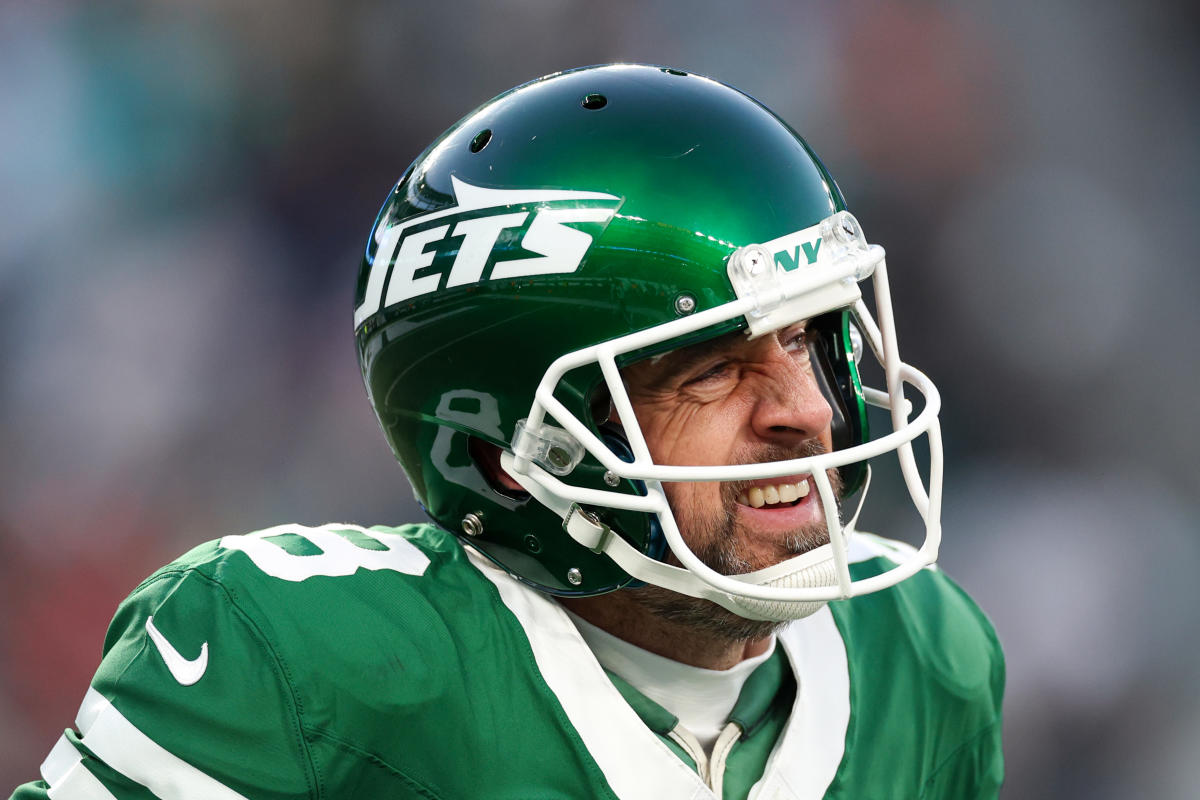
Aaron Rodgers, at 41 years old, is currently in the market for a new job as an NFL quarterback. This situation is not uncommon for players of his age, as the New York Jets’ decision to move on from him after two underwhelming seasons underscores the limited demand for 41-year-old quarterbacks. However, the NFL has seen several Hall of Fame quarterbacks produce remarkable seasons well into their 40s. As Rodgers contemplates his next move, it’s worth examining the careers of these ageless wonders to gauge his potential success and longevity in the league.
The Rarity of Playing Quarterback at 40
Very few quarterbacks even attempt to play past the age of 37. Many of the game’s greatest signal callers, such as Matt Ryan, John Elway, Eli Manning, Dan Marino, Peyton Manning, Philip Rivers, and Ben Roethlisberger, retired at or before this age. The fact that Rodgers was actively playing in his 40s last season is a testament to his physical durability and mental acuity. But how long can he realistically continue at this level? A look at the careers of other notable 40-something quarterbacks provides some insights.
George Blanda: The Multitalented Veteran
George Blanda’s career is a unique case, spanning from 1949 to 1975. By his 40s, he had transitioned from a primary role as a quarterback to a more versatile position, often splitting time between throwing and kicking. In his 41st year, he started only one game as a quarterback, passing for 522 yards, six touchdowns, and two interceptions. However, in his age-43 season, Blanda finished second in MVP voting after leading comebacks with both his arm and his leg. While it’s unlikely that Rodgers will switch to kicking, Blanda’s longevity demonstrates that certain players can remain valuable contributors well into their 40s, albeit in different capacities.
Tom Brady: The Lifespan Defier
Tom Brady is the ultimate outlier in the NFL, defying all norms and expectations. At 41, Brady was coming off an MVP season and led the New England Patriots to a Super Bowl championship. He continued to play for four more seasons, winning another Super Bowl and leading the league in attempts, completions, and yardage in his age-44 season. In that same year, he finished second in MVP voting, behind none other than Aaron Rodgers. Brady’s unparalleled career serves as a benchmark for all quarterbacks who reach their late 30s, proving that with the right combination of talent, preparation, and support, a 40-something quarterback can still excel at the highest level.
Drew Brees: The Legendary Retiree
Drew Brees, a future Hall of Famer and longtime Saints standout, retired after his age-41 season. Despite starting 12 games and passing for 2,942 yards, 24 touchdowns, and 6 interceptions, his effectiveness had noticeably declined relative to his significant contract. Just one year after being named to the Pro Bowl and two years after finishing as a runner-up in MVP voting, Brees called it a career. His story highlights the importance of recognizing when one’s performance is no longer justifying the financial and roster commitment from a team.
Brief Comebacks and Final Acts
Steve DeBerg, Brett Favre, Doug Flutie, Warren Moon, and Vinny Testaverde each offer different perspectives on what a quarterback’s career can look like in their 40s. DeBerg retired at 39 but returned at 44 to play eight games as a backup for the Falcons before retiring again. Favre, like Brees, saw his effectiveness decline sharply in his 41st year, starting 13 games for the Vikings and throwing for 2,509 yards, 11 touchdowns, and 19 interceptions. He retired after that season. Flutie, on the other hand, had a solid age-41 season with the Chargers, passing for 1,097 yards and nine touchdowns, but his role diminished in the following years.
Warren Moon and Vinny Testaverde: Late-Career Spark
Warren Moon had a standout age-41 season, making the Pro Bowl and passing for 3,678 yards, 25 touchdowns, and 16 interceptions for the Seahawks. He played three more seasons but only one was noteworthy. Vinny Testaverde, in his 41st year, started 16 games for the Cowboys, passing for 3,532 yards, 17 touchdowns, and 20 interceptions. His role dwindled in the following years, but he remained reasonably productive in his 41st season. These examples show that while a 41-year-old quarterback can still be a valuable asset, the decline in performance is often inevitable and rapid.
The Path Forward for Aaron Rodgers
The chances that Aaron Rodgers will continue to succeed at 41 are slim but not nonexistent. To follow in the footsteps of Tom Brady, Rodgers would need to maintain his exceptional talent, dedication, and physical condition. While emulating Brady is a tall order, Rodgers has already defied expectations by playing at a high level well into his 40s. The key will be finding a team willing to invest in him and providing him with the right support system to maximize his remaining potential. The next chapter of Rodgers’ career will be a testament to his resilience and the enduring allure of the quarterback position in the NFL.