
Travis Hunter: The Two-Way Enigma
Matt Harmon is keenly interested in any information that might shed light on Travis Hunter’s future role in the NFL. As a two-way player at Colorado, Hunter logged over 100 offensive and defensive snaps in 11 of 13 games, a feat that is both unprecedented and under-discussed. The early consensus seems to lean towards Hunter becoming a full-time cornerback with occasional wide receiver duties, but this projection is far from set in stone. The opinions of the Titans and Browns, two teams with high draft picks, illustrate the variability in how teams view Hunter. The Titans see him primarily as a cornerback, while the Browns view him as a wide receiver first. This discrepancy highlights the complexity of Hunter’s situation. As a pure wideout, Hunter’s game is reminiscent of Odell Beckham Jr. in his early prime, and he has the potential to become a top-tier receiver if given the opportunity. However, the financial implications of his position choice are significant. Top corners like Patrick Surtain II and Jalen Ramsey earn around $24 million per year, which is comparable to the salaries of elite wide receivers. Hunter’s preferences and the team that drafts him will ultimately determine his playing time, making this a fascinating and unpredictable scenario.
Cam Ward: The Wild Horse with a Golden Arm
With Shedeur Sanders opting out of the combine, Cam Ward, the quarterback from Miami, has a golden opportunity to showcase his skills in Indianapolis. Ward is known for his aggressive passing style, leading the nation with 10.52 adjusted yards per attempt. His game has a wild, untamed quality that could be refined but is better to have than a timid passer. The most crucial aspect of Ward’s combine performance will be his interviews and meetings with teams, especially those with top-five picks. However, a strong throwing session could solidify his position as the best arm talent among the likely first-round quarterbacks. For fantasy enthusiasts hoping for a rookie quarterback to maximize the potential of their pass-catchers, Ward is the best bet. His presence and performance could significantly impact the draft landscape and his future in the NFL.
Omarion Hampton: The Explosive Running Back
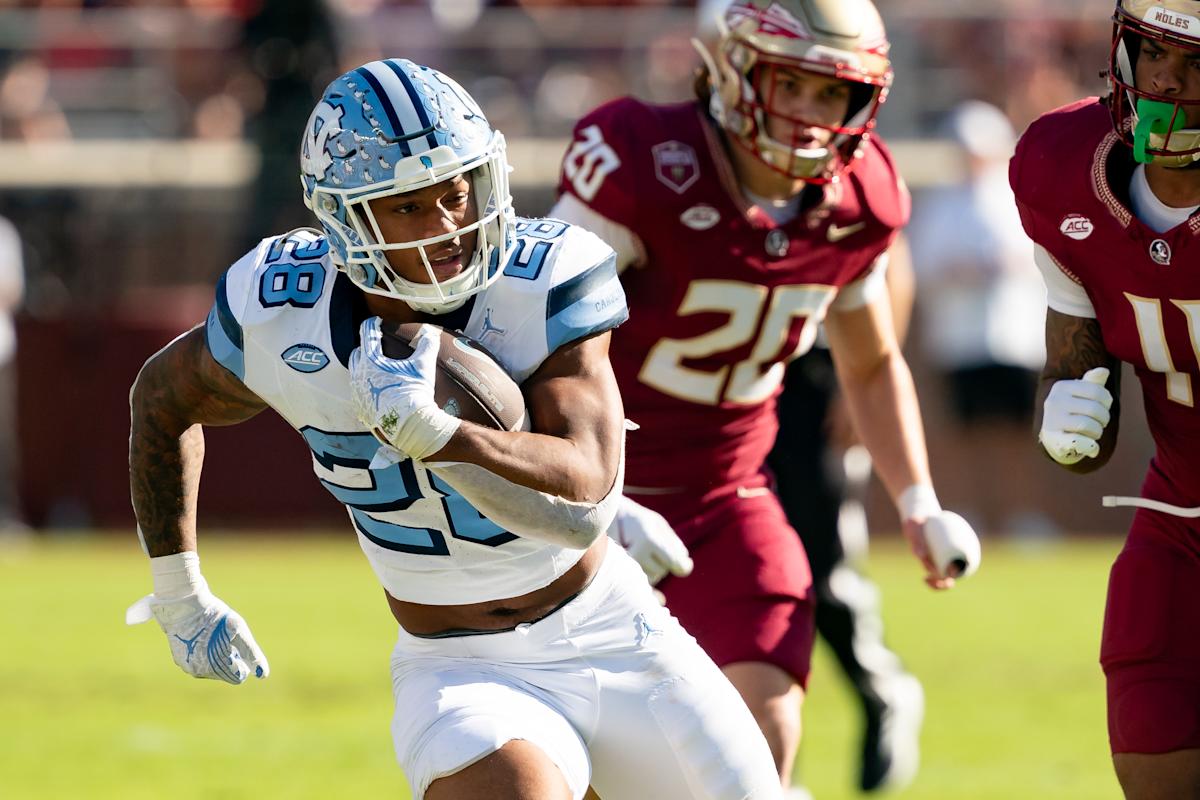
Omarion Hampton, a running back from North Carolina, is another player who can benefit from the absence of a top prospect at his position. While he is unlikely to surpass Boise State’s Ashton Jeanty as the consensus RB1, Hampton has a chance to enhance his draft stock with a strong showing in Indianapolis. Hampton is an explosive player with a ferocious rushing style, averaging 4.35 yards after contact per attempt, which ranks third among FBS running backs with 200-plus carries. He also offers a credible threat as a receiver, catching 30 passes on first and second downs last season. Athletic testing, while not the be-all and end-all for running backs, can provide valuable insights. A strong week in Indianapolis could lock Hampton into the first round of the NFL Draft, making him a promising rookie option for fantasy football.
Tetairoa McMillan: The Contested Catch Specialist
If Travis Hunter doesn’t play wide receiver, Tetairoa “Tet” McMillan could emerge as the top wideout in this draft class. McMillan is a big, physical receiver who is better at separating on short and intermediate routes than many give him credit for. He fits the archetype of a contested catch wideout, similar to Michael Pittman and Courtland Sutton. While his 40-yard dash time might not be the most critical metric, a strong performance could change the narrative on his draft range. Draft analysts like Daniel Jeremiah and Mel Kiper have McMillan sliding to the back half of the first round in their recent mocks. A 40-yard dash time in the low 4.5s could prevent this slide and solidify his position as a top prospect. McMillan’s ability to win in isolation and create easy touches for quarterbacks, combined with his physicality, makes him a valuable asset in today’s NFL.
Luther Burden: The Slot Receiver with Potential
Luther Burden, a wide receiver from Missouri, is a player with a wide range of opinions. Data-based prospectors like JJ Zachariason have Burden as a potential WR1 in this class, but his production on short targets out of the slot raises some concerns. Film opinions are mixed, with some analysts praising his deep-ball tracking and route-running skills against man coverage, while others see him as a manufactured target player who may need to be schemed into the right situations. Burden’s game has elements that overlap with that of Khalil Shakir, a Bills wideout who recently received a significant contract extension. Players who can win in isolation and make plays after the catch are highly valued in modern NFL offenses. While his combine performance is less critical than his game film, strong athletic testing data could provide additional clarity on his potential as a pro. The industry is eager to see more from Burden, and any positive results in Indianapolis could boost his draft stock.
The Importance of the NFL Scouting Combine
The NFL Scouting Combine in Indianapolis is a critical event for draft prospects, offering teams and analysts a chance to evaluate players in a controlled environment. For players like Travis Hunter, Cam Ward, Omarion Hampton, Tetairoa McMillan, and Luther Burden, the combine can provide valuable insights into their potential roles and contributions at the next level. While athletic testing and physical measurements are important, the interviews and meetings with team personnel can be even more revealing. These interactions can help teams understand a player’s mindset, work ethic, and adaptability, all of which are crucial for long-term success in the NFL. For fantasy football enthusiasts, the combine offers a glimpse into the future, helping to project the potential impact of these prospects in their respective positions. As the draft approaches, the information gathered in Indianapolis will be instrumental in shaping the narratives and expectations for these players.