
Justin Herbert’s Resilience in the Face of Adversity
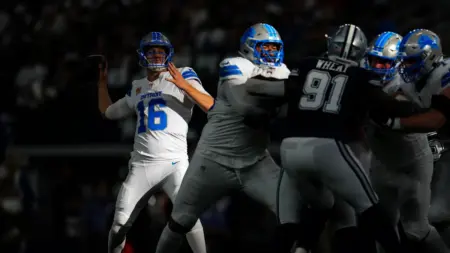
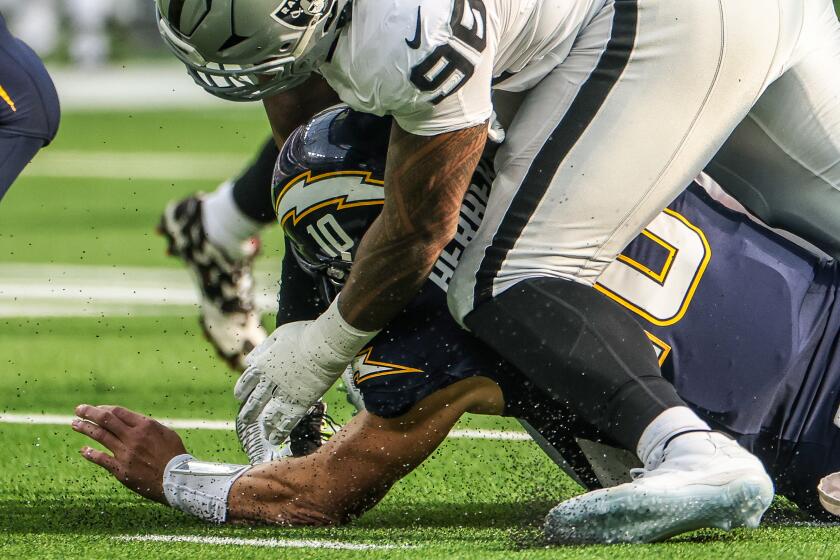
It’s not the optimal path — Justin Herbert finishing the Chargers season with a cast on his non-throwing hand — but it’s a testament to the grit and determination often required of NFL quarterbacks. Herbert suffered a fracture in his left hand during a collision with a Las Vegas Raiders defender last Sunday. Despite the severity of the injury, he continued playing and even threw a touchdown pass on the subsequent play. The incident was so understated that it only garnered attention minutes later when the camera panned to his injured hand.
The Quest for Toughness and Stoicism
Herbert underwent surgery on Monday to stabilize the break and, undeterred by the setback, was hellbent on playing in Monday night’s game against the Philadelphia Eagles. This attitude is not unique to Herbert. Former NFL quarterback Matt Hasselbeck, who played for 18 seasons, explained the critical mindset: “The doctors will tell you this one sentence that determines whether you’re going to play: ‘You can’t hurt it any worse.’ That doesn’t mean you won’t be in excruciating pain. You probably will. It means you’re not going to break it worse, and the remedy is still the remedy.” The expectation for quarterbacks to be tough and stoic is deeply ingrained in the sport, and Herbert’s determination to play exemplifies this ethos.
Navigating the Challenges of a Hand Injury
The primary issue for Herbert isn’t throwing the ball, as he is right-handed. However, taking a snap from under center and handing off on runs to his right are tasks that typically require the use of his left hand. “Typically, you’ll see a quarterback with a cast extending both hands so they don’t lose the grip,” said Rich Gannon, who played with a broken hand and wore a hinged cast to manage his injury. This requires extensive practice during the week to ensure that the quarterback can execute these plays effectively. Pain management is a crucial aspect, but traditional methods like painkilling injections are often not viable for hand injuries due to the risk of further damage and reduced grip strength.
The Psychological Battle and Team Dynamics
NFL legends like Hall of Fame quarterback Steve Young emphasize the importance of a quarterback’s toughness in setting the tone for the team. “I’m not saying that your quarterback is as tough as a defensive lineman, but if your quarterback doesn’t have that toughness, it slowly starts to eroding the locker room,” he said. The quarterback creates a “sacred trust” by demonstrating that they will do everything possible to be on the field, which builds a bond within the team. “The second your teammates think you’re trying to duck something, it allows other people to duck and they feel righteous about it,” Young added. This trust is essential, especially in moments of adversity, when players rely on each other to fight through challenges.
Historical Examples of Resilience
The history of the NFL is replete with examples of quarterbacks pushing through injuries. Steve DeBerg, while playing for the Kansas City Chiefs in 1990, suffered a broken left pinkie that was smashed between the helmets of two pass rushers. Despite the severity of the injury, he finished the game in the shotgun formation and didn’t miss any more time. Archie Manning, the legendary Ole Miss quarterback, played with a cast on his broken left forearm, even running for 95 yards and two touchdowns against Auburn in the 1971 Gator Bowl. These stories of resilience serve as inspiration for current players like Herbert, who must navigate both physical and psychological challenges.
The Behind-the-Scenes Heroism
The support staff, particularly athletic trainers, play a crucial role in helping quarterbacks manage injuries. Matt Hasselbeck’s experience with Seattle Seahawks athletic trainer Sam Ramsden is a prime example. Ramsden, known for his innovative approach, designed custom casts and braces to help Hasselbeck through his injuries. Each cast was named after a mountain peak, symbolizing the difficulty of the challenge. For instance, the cast Hasselbeck wore during the 2010 playoff game against New Orleans was named “Kilimanjaro,” a nod to the significant challenge of the game. These behind-the-scenes efforts highlight the dedication and problem-solving skills required to keep players on the field and competing at their best.
In the end, Justin Herbert’s determination to play through his injury is not just a personal triumph but a reflection of the resilient spirit that defines the NFL. As he and his teammates face the challenges ahead, this unwavering dedication will be a critical factor in their success.